Impossible Ceramics
Using an experimental 3D printing material, I developed a technique for crafting intricate geometries in porcelain and other ceramics
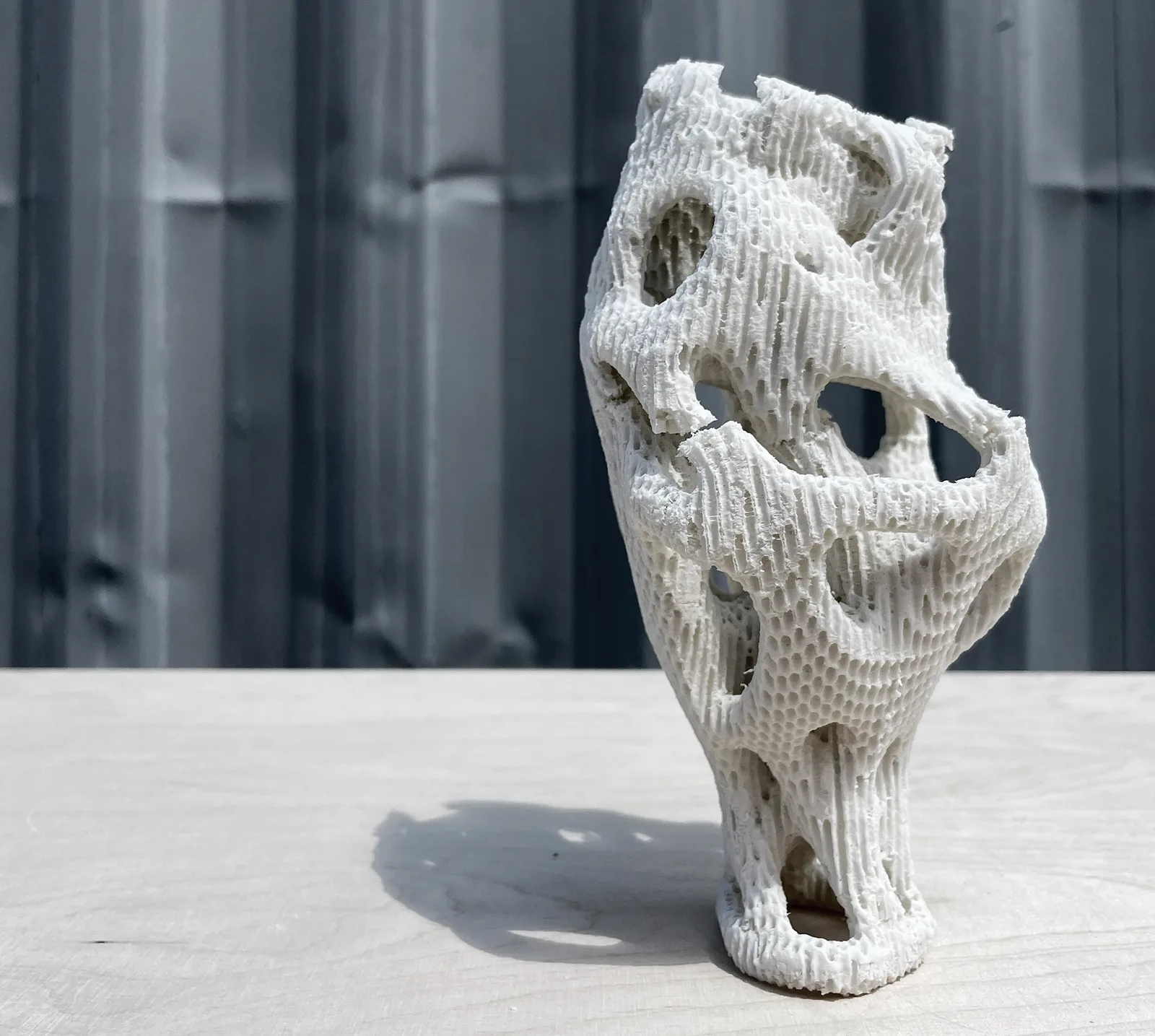
Ceramic filters for metal casting are often produced using synthetic or natural sponges. The sponge is dipped into liquid ceramic, which it absorbs. After drying, the sponge undergoes firing, during which the synthetic or organic material decomposes, leaving only the ceramic material present.
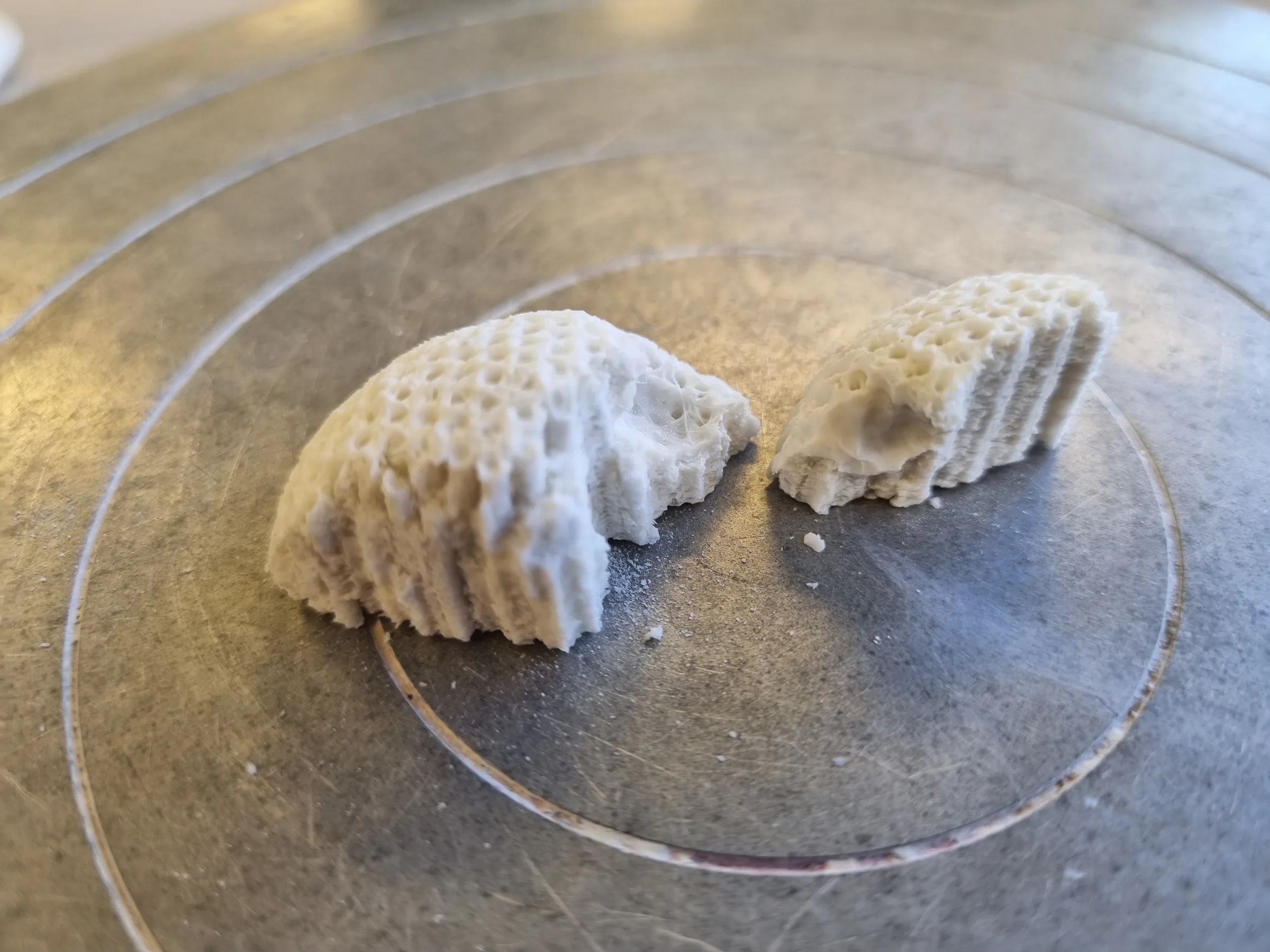
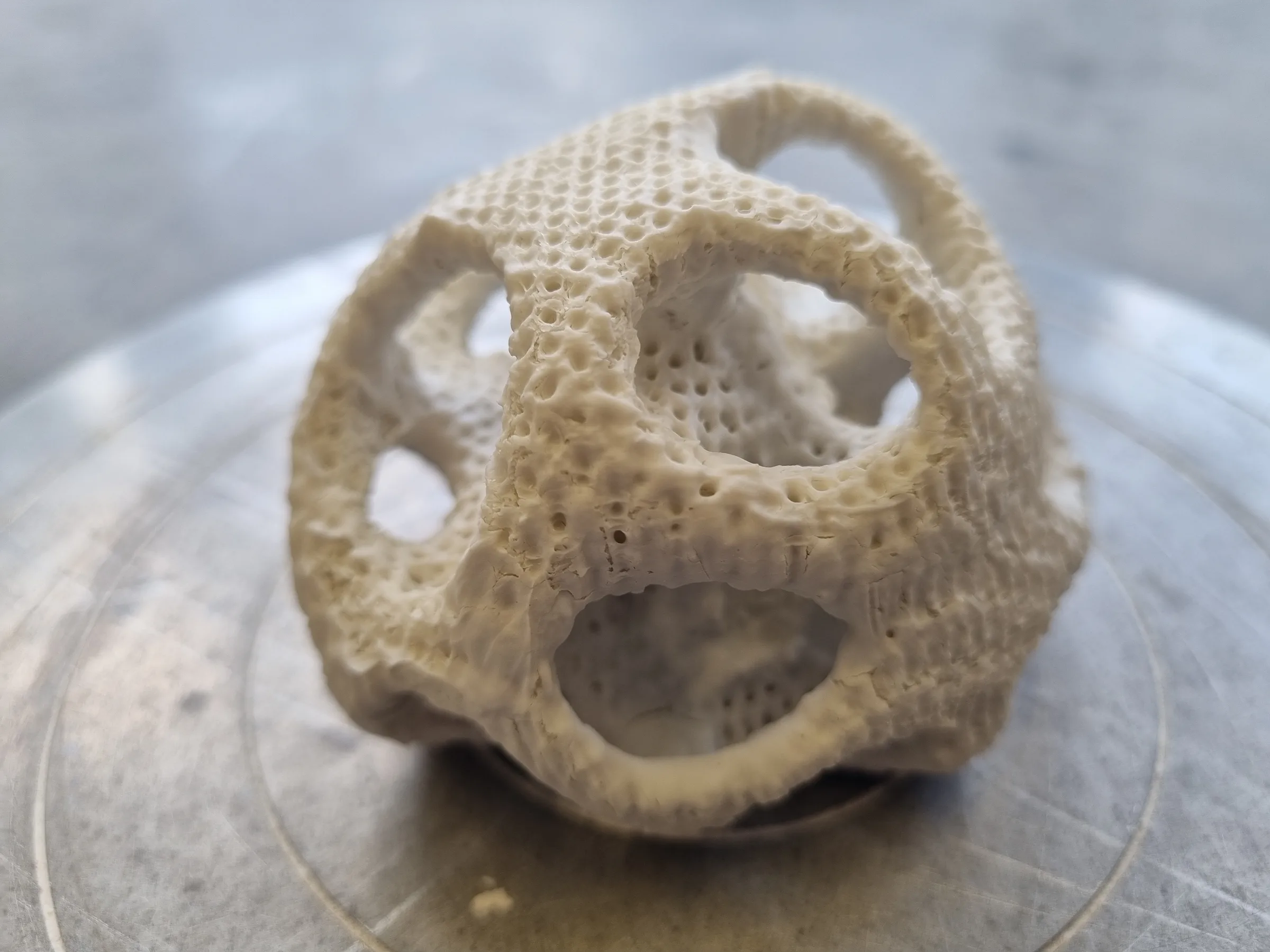
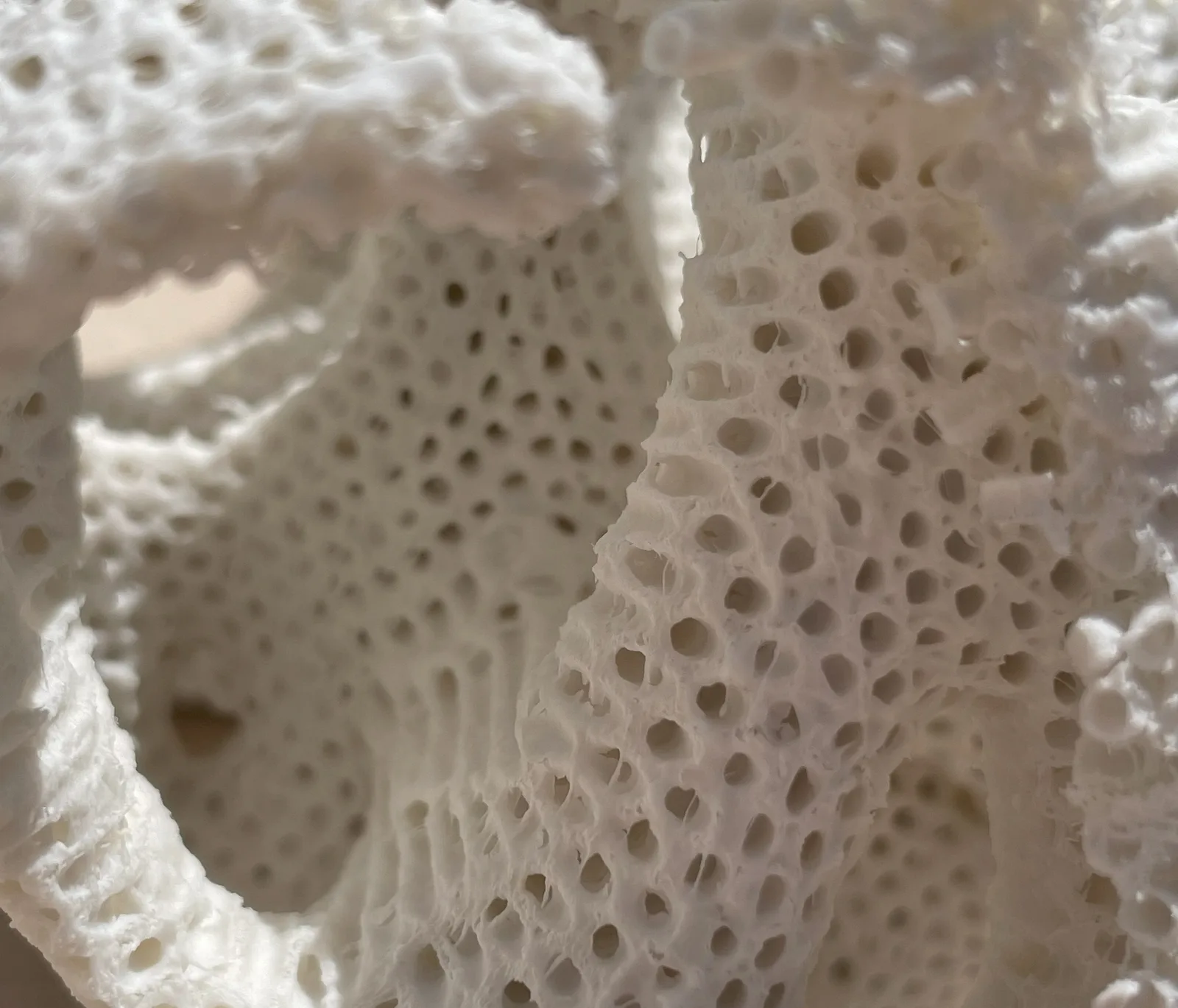
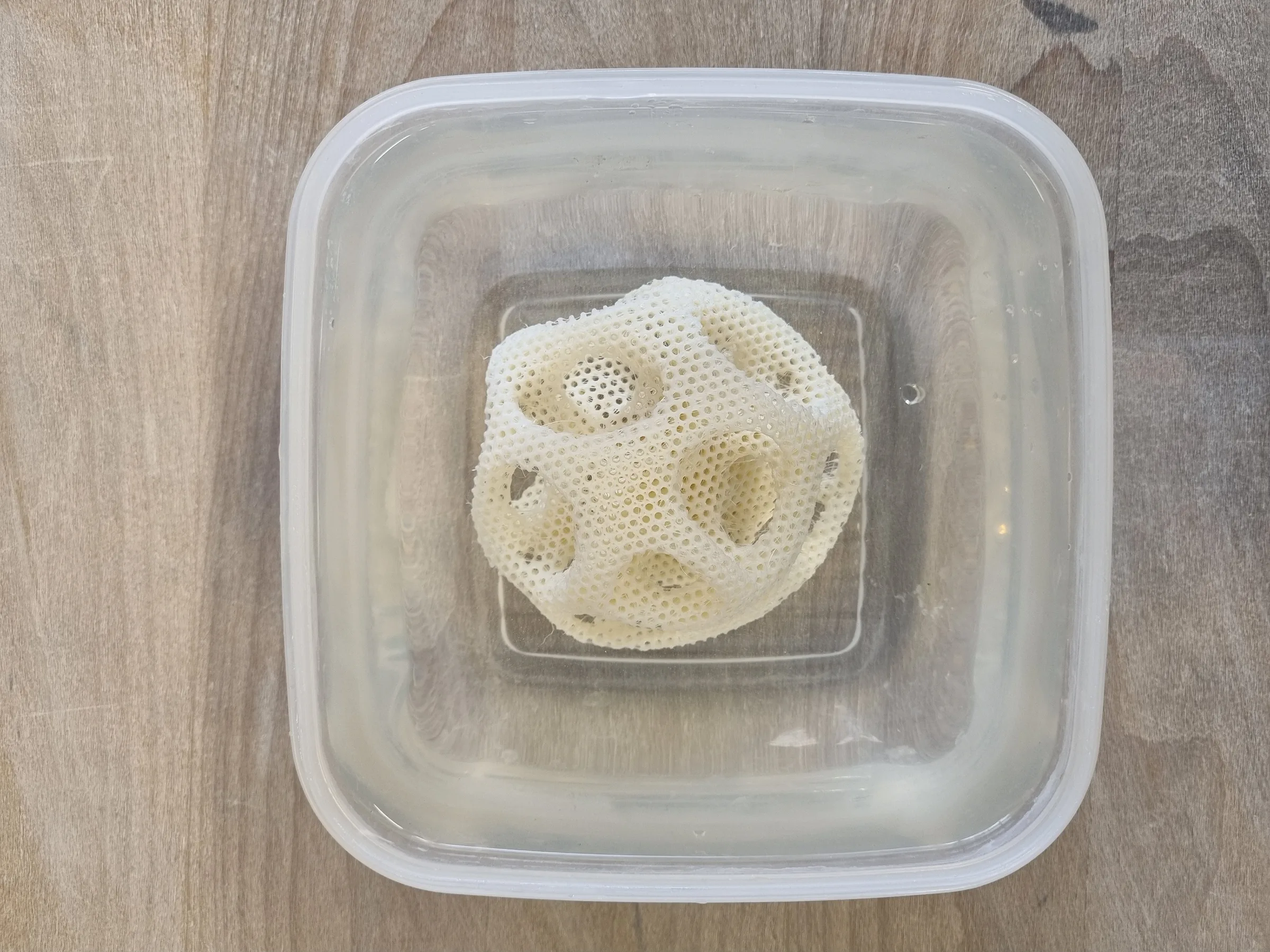
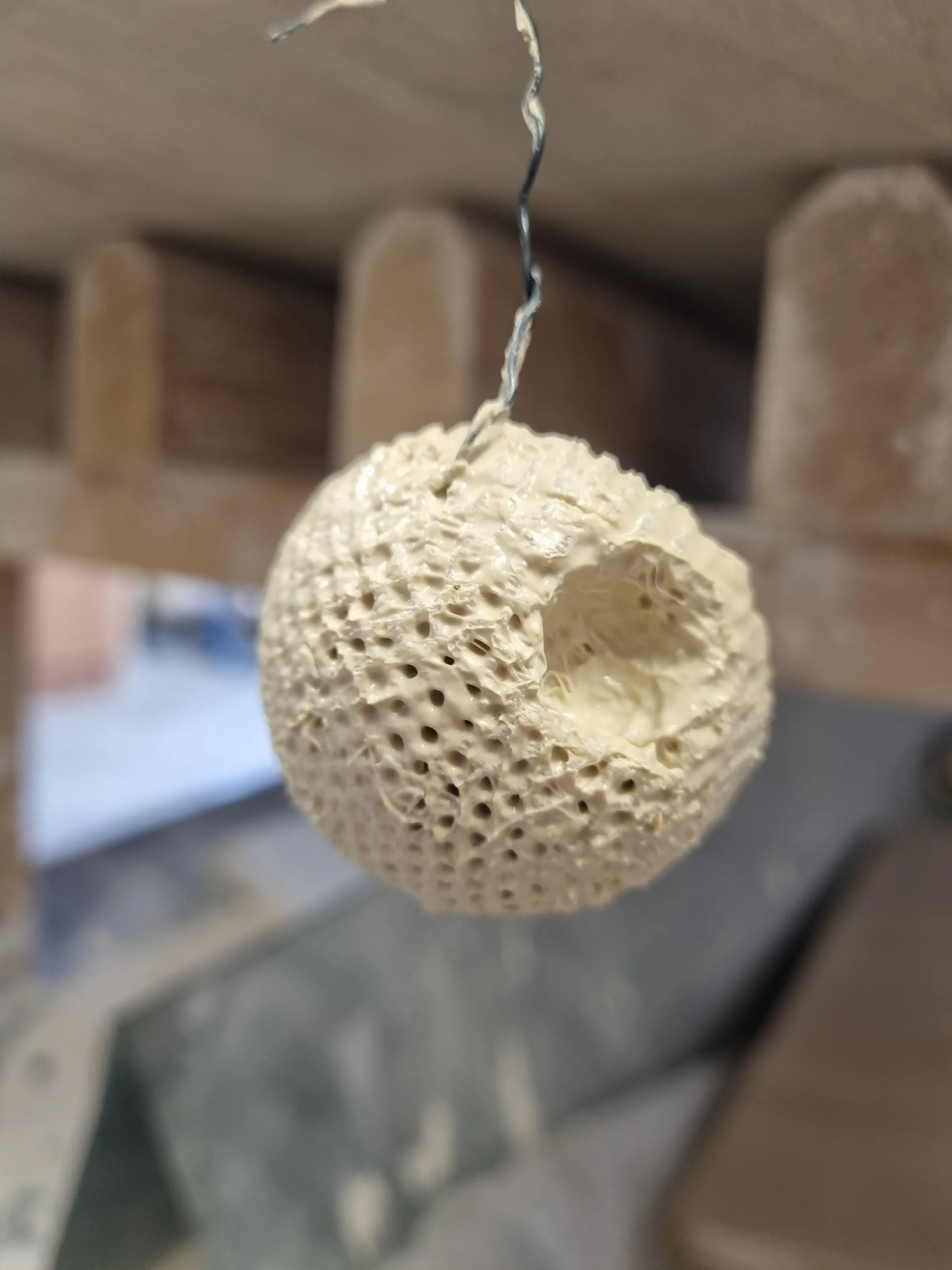
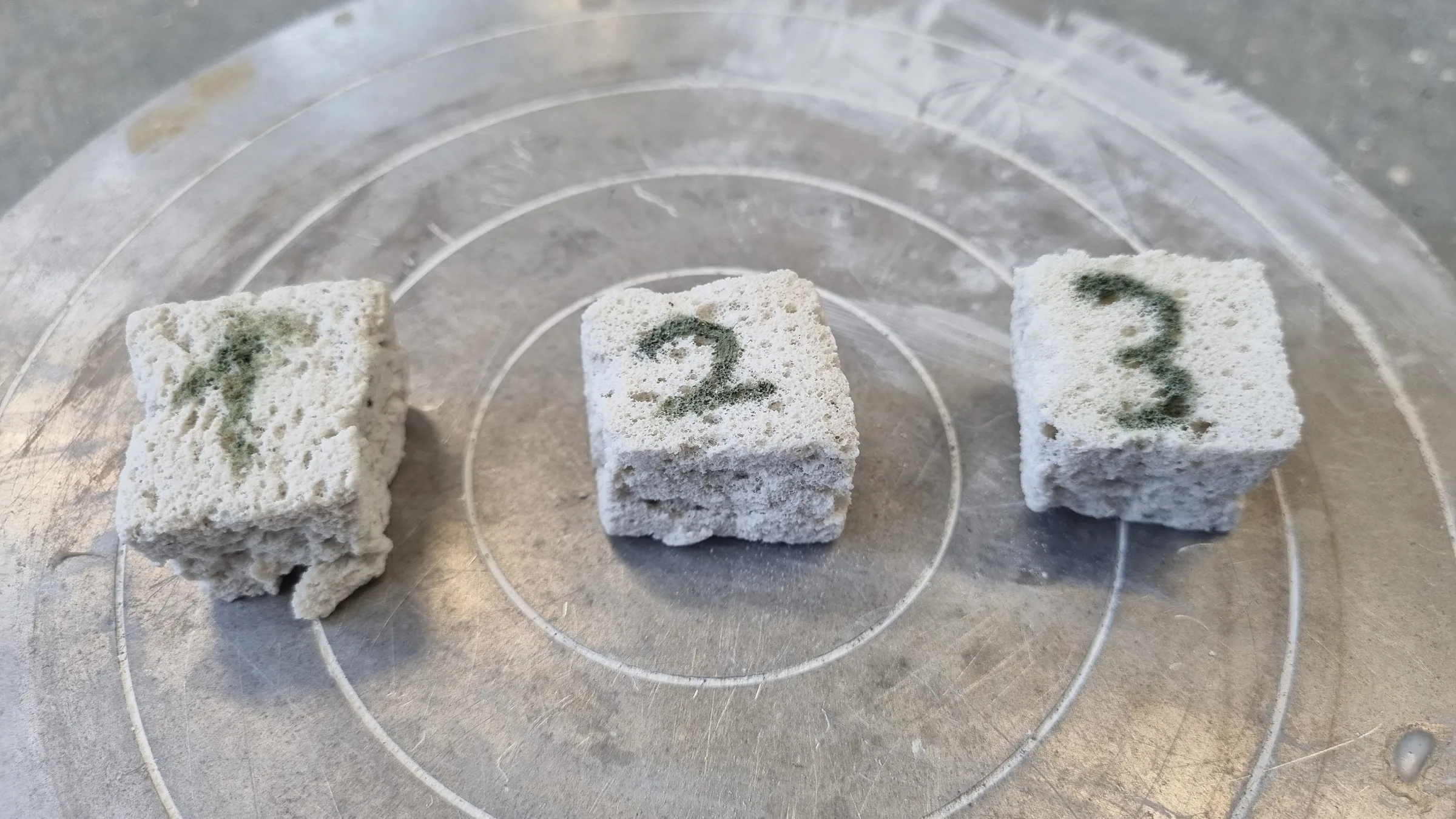
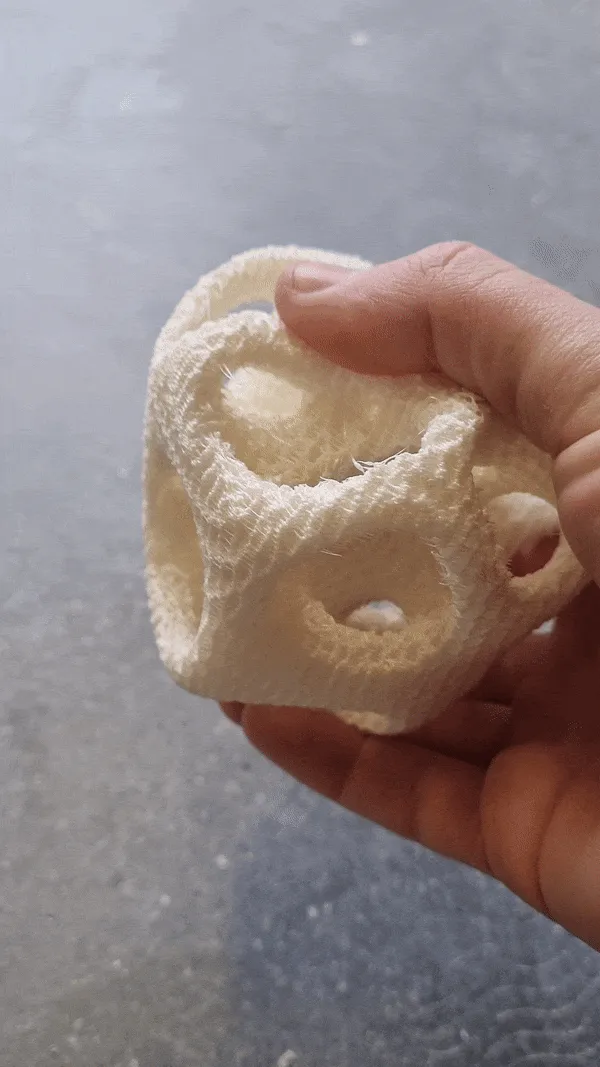
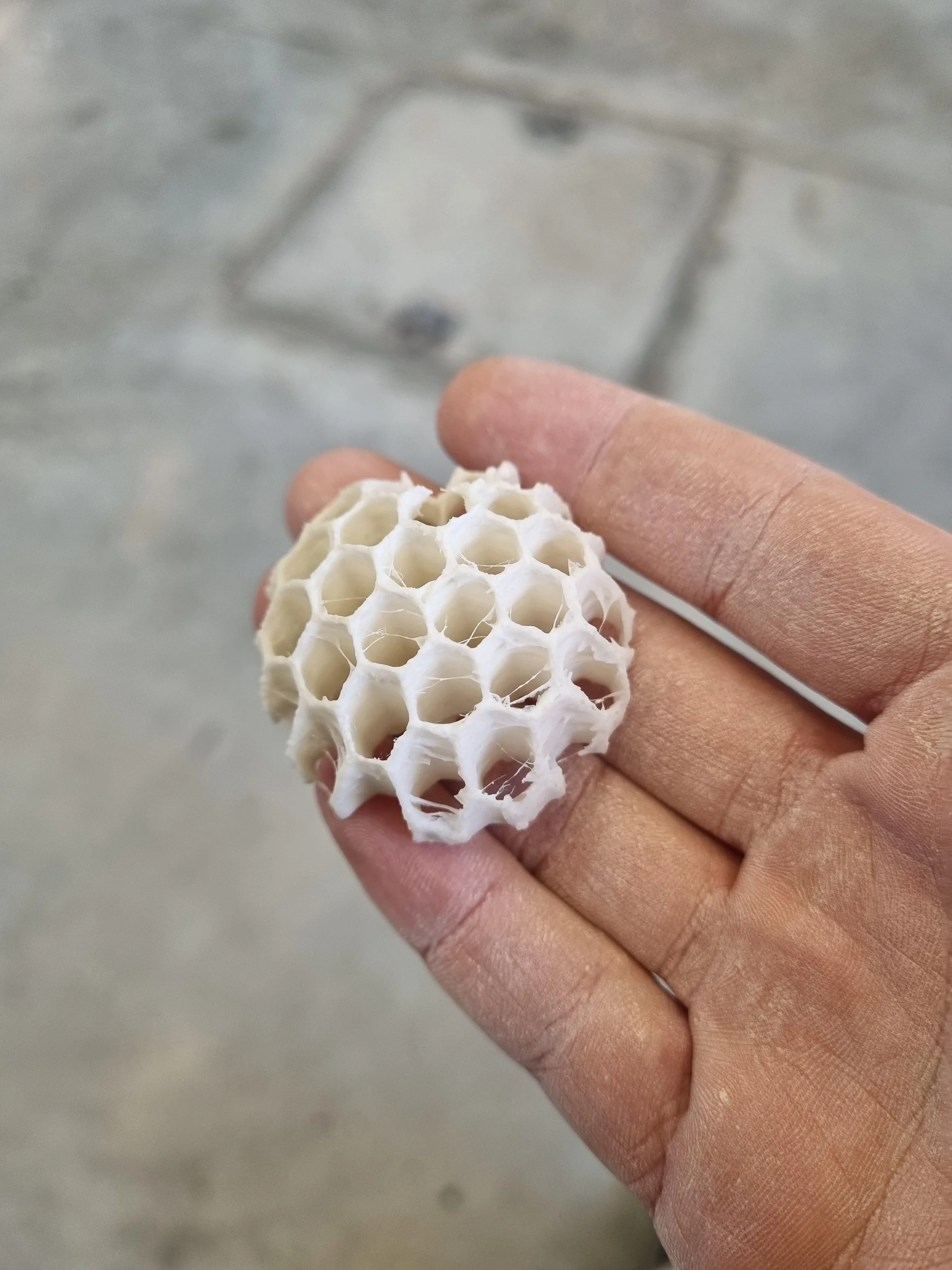
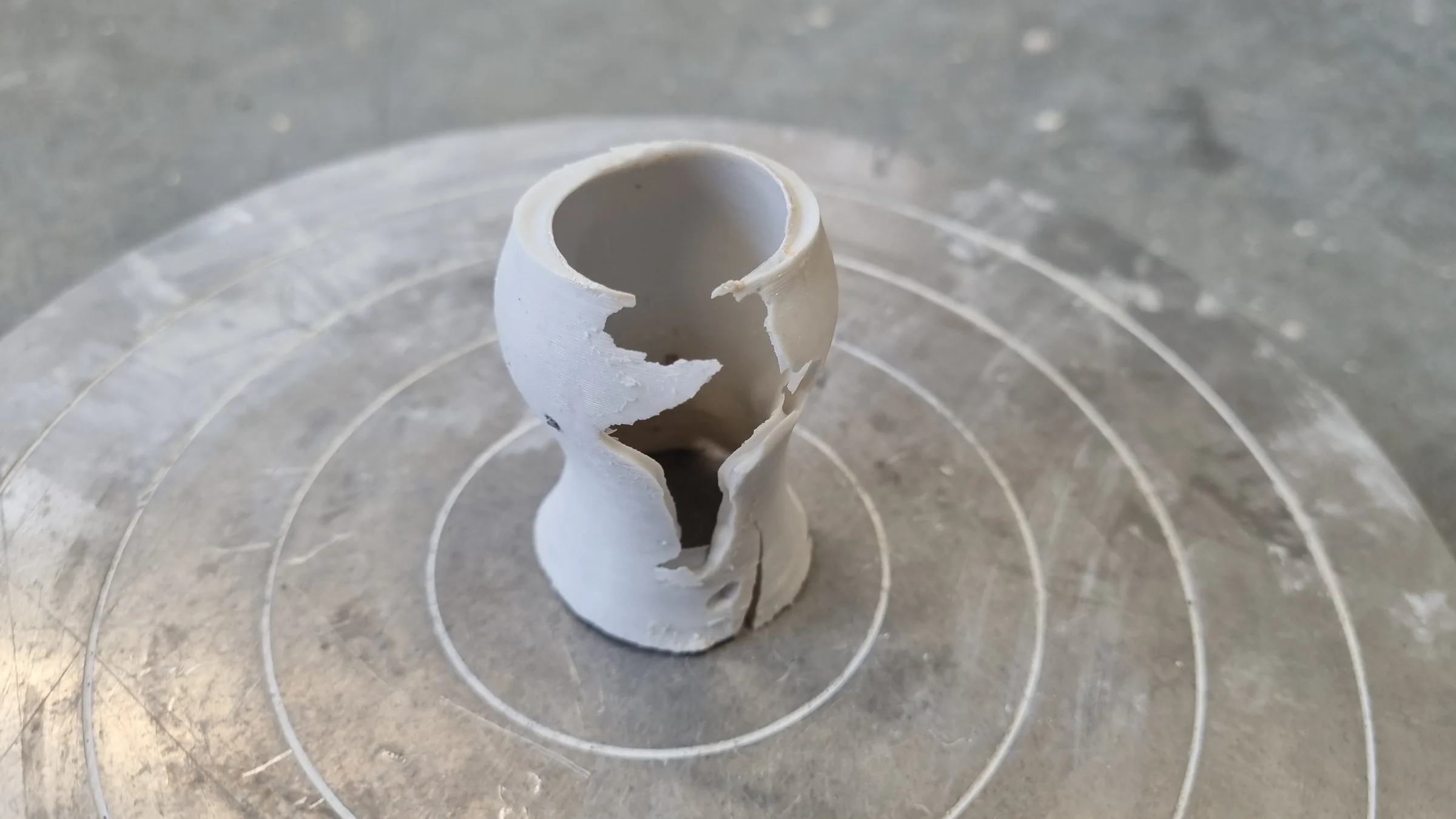
Searches through hardware stores and online forums led me to an experimental 3D printing material called LAYFOMM, a combination of a porous substance and PVA. The printing process is carried out as usual, but the real magic happens when the printed object is immersed in water. Over the course of up to two days, the PVA, which gave the object its rigidity, dissolves, leaving behind the same form, but now more flexible and, most importantly, capable of absorbing liquids. The guiding concept is to print the material, transform it into a sponge, soak it in liquid porcelain, dry it, and fire it. After firing, the only remaining material is the porcelain.